
Why Haven’t Loan Officers Been Told These Facts?
FICO and VantageScore: Let the Games Begin!
When the federal government envisioned the benefits of competition among credit score providers, it overlooked one crucial aspect of the implementation. That would be truth-telling. Amidst the bombast, as they say in war, the first casualty is always the truth.
With truth subjectified, anyone’s truth is just as good as anyone else’s. When truths conflict, logic dictates that both parties’ truth claims may be wrong, but both cannot be right. Where does that leave lenders seeking to improve their mortgage capabilities amid the promise of new scoring models? With credit score providers taking potshots at each other and manipulating the discourse, ultimately, lenders may have to learn by experience. That said, there may be opportunities to read between the lines of what stakeholders are publicly offering.
Understanding statistics and data modeling is beyond the expertise of many lenders. For third-party originators, partnering up with more resourceful fulfillment partners during the credit score transition might be prudent. There is no need to reinvent the wheel.
Both credit score providers claim their models are the best at everything. That is probably less than accurate. With experience, the mortgage industry will begin to discern that certain consumer types and transaction types may fare better with one model over the other. In the meantime, what to do with the competing truth claims? Take it all with a grain of salt. For starters, FNMA and FHLMC have yet to accept delivery of loans with FICO 10T, and there is a limited pilot for lenders delivering loans with VantageScore 4. So as of now, with originations intended for the GSEs, lenders do not have the option to choose. However, that may not be the case with some government-insured loans. Additionally, for third-party originators, the implementations are lender-dependent. As of yet, lenders may still choose to submit loans with the classic FICO model.
FICO is currently running a free-access program that allows lenders to compare versions 10T and Classic on real-world transactions. Access to FICO 10-T and VantageScore 4 scores could be extremely beneficial for evaluating truth claims and validating hypotheses needed for simple heuristics. A heuristic helps lenders provide fundamental guidance when selecting among various scoring models. One thing has not changed: a single point can still be the difference between approval and adverse action. This necessary guidance should help decision-makers provide their customers with the best possible options and, ideally, be straightforward and easy to implement. Sort of like the Miracle on 34th Street. Macy’s and Gimbel’s, working together for good. For example:
- We have found that thin-file applicants with less than 24 months of rental activity score higher with X than with Y.
- We found that thin-file applicants with active medical collections scored higher with Y than with X.
- We have found that consumers with significant delinquencies tend to score higher on X than on Y.
- We have discovered that consumers with strong trended data and on-time payments score better on Y than X.
Until then, hold on. The war for the hearts and minds of the mortgage industry, and for early market dominance, will be a no-holds-barred contest. One gets the sense that FICO is getting treated like a red-headed stepchild. Maybe FICO failed to demonstrate
appropriate obsequiousness to the right people.
From FHLMC and FNMA:
FHLMC 5203.2(c) Required Credit Score versions Effective 04/22/2026
Freddie Mac is transitioning toward a modernized and more competitive Credit Score framework for Mortgage underwriting. In support of this transition, the U.S. Federal Housing (FHFA) has approved the use of Classic FICO®, VantageScore® 4.0 and FICO Score 10T models.
Each of the three major U.S. CRAs uses a different name to refer to Classic FICO scores; however, all FICO scores are based on the same underlying FICO scoring model developed by Fair Isaac Corporation. The following Credit Score versions generated by each CRA are used to determine the Underwriting Score and Indicator Score for Mortgages delivered to Freddie Mac:
- Equifax® FICO Classic v5
- Experian®/Fair Isaac Risk Model v2
- TransUnion® FICO Risk Score 04
The following versions of VantageScore 4.0 are also eligible for use by approved Sellers:
VantageScore 4.0 versions
- Equifax VantageScore 4.0
- Experian VantageScore 4.0
- TransUnion VantageScore 4.0
Sellers that wish to participate in the delivery of Mortgages assessed using VantageScore 4.0 should contact their Freddie Mac representative or Customer Service at 800-FREDDIE for information regarding program availability, eligibility requirements and applicable delivery instructions.
From FHLMC Regarding FICO 10T versions
Mortgages delivered with FICO Score 10T are currently not eligible; however, as further progress is made on the updated credit score framework, Freddie Mac plans to purchase Mortgages delivered using FICO Score 10T.
From FNMA Regarding FICO 10T versions
Fannie Mae is working to implement FICO Score 10T in a timely manner. Lenders will be advised when loans with FICO Score 10T can be delivered.
Claims From FICO That VantageScore 4.0 Disadvantages Consumers Without a Mortgage History
FICO® Score 10T handily wins despite VantageScore’s attempt to improve the performance of VantageScore 4.0 by including mortgage-specific variables in its model. But, including mortgage-specific variables penalizes people who have never owned a home. Under VantageScore millions of Americans—including young people, members of the military, and people from disadvantaged groups—will have lower scores than they otherwise would, merely because they have never owned a
home. That’s unfair. Forcing lenders to tell people from disadvantaged groups through adverse action notices that they have been rejected for a mortgage because they don’t currently own a home is irresponsible. FICO Score 10T includes rental data while not penalizing people for not owning a home.
Claims From FICO That VantageScore 4.0 Disadvantages Consumers With Medical Collections
Under the FHFA’s Joint Enterprise Credit Score Solicitation process, both FICO and VantageScore submitted applications for consideration of their respective credit scores. The GSEs proceeded to obtain research datasets for FICO® Score 10T and VantageScore 4.0 and evaluated these scores for accuracy and reliability. Subsequently, on August 10, 2022, nearly two years after both FICO and VantageScore submitted their models for evaluation by the GSEs and FHFA, VantageScore announced that it was modifying VantageScore 4.0 to exclude a large category of predictive credit file information—Medical Debt Collection Records.
We acknowledge that medical collections are a legitimate topic for debate by policy makers and others on their appropriateness for inclusion in credit files and credit scores. We further acknowledge that certain states have designed laws to prohibit the inclusion of medical collections in credit files for residents of their states. At the same time, medical collections are still reported to and included in the credit files of the three large nation-wide credit bureaus, Transunion, Experian and Equifax
and are available for use in the majority of states. VantageScore’s change to VantageScore 4.0, while applauded by some, still raises questions of a potential serious breach of the integrity of the FHFA and GSE Validation and Approval of Credit Scores process that would impact the comparison
not only of FICO® Score 10T and VantageScore 4.0, but the comparison of Classic FICO® Score and VantageScore 4.0 for purposes of determining whether VantageScore 4.0 now even outperforms
Classic FICO.
VantageScore, itself, admitted that this change would impact the performance of its model when it
announced the change on August 10, 2022 as follows: “Impact to the VantageScore models’ predictive performance is expected to be minimal for a large segment of the population.” Our research has similarly and consistently shown predictive value from the inclusion of medical collections on credit scores. While VantageScore attempts to downplay any impact on predictive performance, it could be material: after all, what is the effect of a “minimal” impact on a VantageScore 4.0 already only “marginally more effective”? And this leads to the problem of understanding the comparison of VantageScore 4.0 to FICO® Score 10T.
As noted above, the historical database used to compare VantageScore 4.0 to Classic FICO® Score was published by the GSEs. But, which version of VantageScore 4.0 does it include—the one that includes medical collections or the one that doesn’t? No stakeholder seemingly has any way of knowing. If it includes the version that considers medical collections, then the performance of FICO® Score 10T over VantageScore 4.0 would be even greater than the already superior performance by FICO Score 10T discussed in this paper.
Excerpted From Recent VanatageScore Media Releases
FICO 10T has seen limited real-world adoption beyond controlled trials. In contrast, VantageScore 4.0 has been in active use for more than five years and is currently deployed by thousands of financial institutions across the credit ecosystem. FHFA, the FHA, Veterans Administration and many of the largest Federal Home Loan Banks all accept VantageScore 4.0. No performance data for 10T has been provided for these institutions.
VantageScore 4.0 delivers a materially more inclusive view of creditworthiness, scoring approximately 33 million more consumers than FICO 10T. Within this population, nearly 10 million individuals achieve a VantageScore of 620 or higher, levels generally considered creditworthy in mortgage underwriting.
While VantageScore continues to publish extensive historical performance datasets and provide ongoing access to analytics through tools such as RiskRatio™, comparable transparency has not been provided for FICO 10T—particularly in the context of GSE-relevant mortgage data.
Key VantageScore Claims
- Stronger Market Validation: Large lenders view VantageScore 4.0 as equal to or better than FICO 10T, supported by real-world deployment and performance.
- Broader Consumer Coverage: VantageScore 4.0 scores 33 million more consumers, including nearly 10 million with scores above 620 who are invisible to FICO 10T.
- Proven Track Record and Transparency: With more than five years of market use and extensive published datasets, VantageScore 4.0 offers a level of validation and openness not currently matched by FICO 10T.
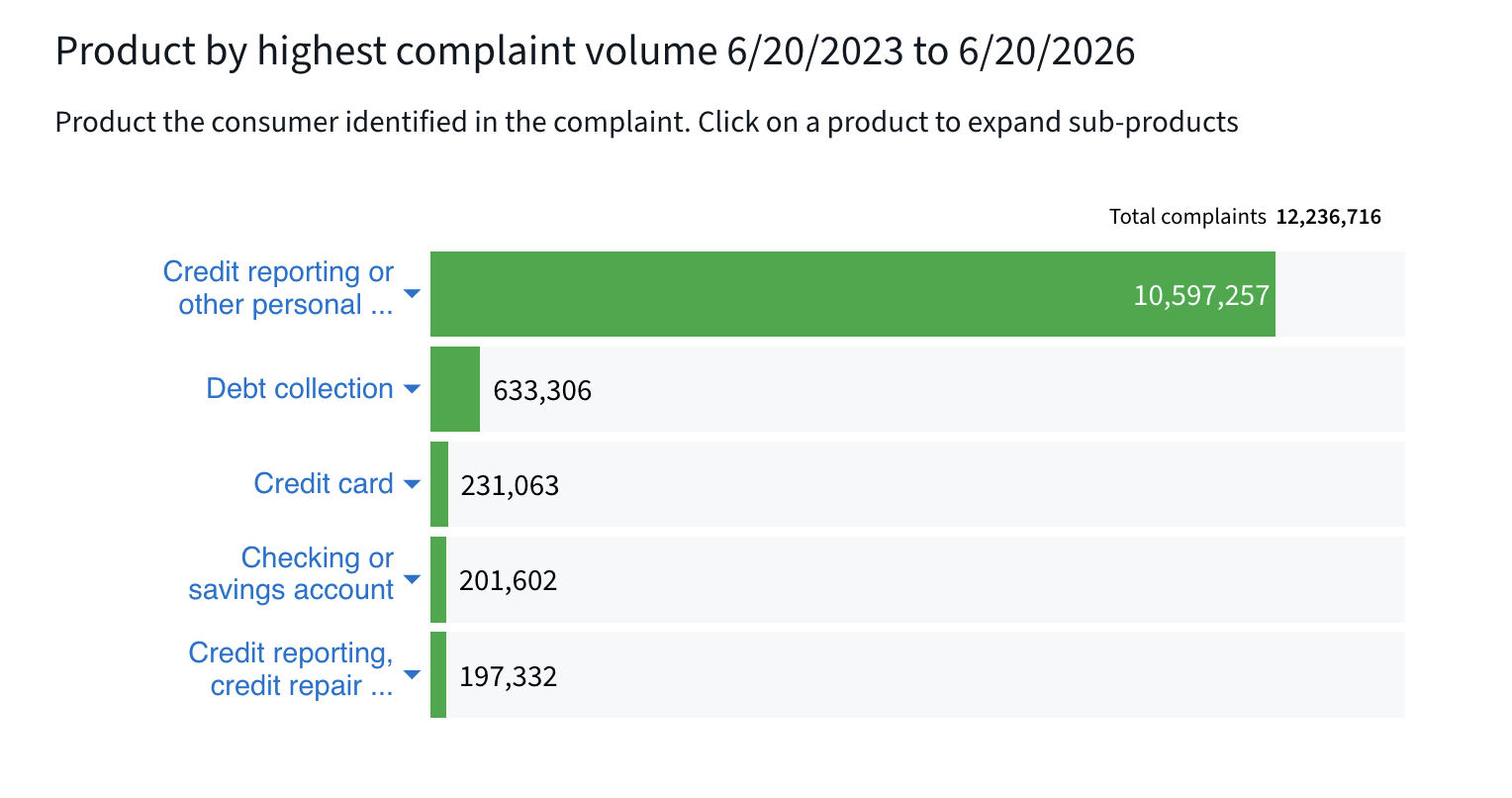
It is worth noting that VantageScore is an independently managed joint venture of the nation’s three Nationwide Consumer Reporting Agencies (NCRAs) – Equifax, Experian and TransUnion – the same three actors that have garnered roughly 86% of total CFPB complaints in the last three years. Does that translate to a problematic credit score manufacture?
FICO retained the risk-management firm Milliman to compare the predictive power of each model. Access the report at the link below.
June 9th, 2026 FICO Announcement
To ensure lenders can evaluate the [10-T versus Classic FICO] findings for themselves, FICO® Score 10T is currently available at no cost alongside Classic FICO through the FICO Score 10T Free Access Program, enabling side-by-side testing without requiring lenders to pay for an additional score. More than 60 lenders have signed up so far.
“The early bird gets the worm, but the second mouse gets the cheese.” ― Willie Nelson
FICO® Score 10T Materially Outperforms VantageScore 4.0
VantageScore 4.0 Outperforms FICO 10T
Milliman Predictive Analysis: FICO 10T vs VantageScore 4.0
FNMA B3-5.1-01, General Requirements for Credit Scores (04/22/2026)
BEHIND THE SCENES: NEW DEPARTMENT OF JUSTICE SHERIFF, LOOKING FOR MORTGAGE FRAUDSTERS? PROBABLY NOT RIGHT AWAY.
The recently established National Fraud Enforcement Division appears to signal a reallocation of resources, with a primary focus on healthcare fraud, particularly related to Medicaid. However, noteworthy are the housing parallels to federal healthcare programs. Federal housing programs, sponsorships, and subsidies represent substantial financial investments by the government. Consequently, it is plausible that this new division may seek to identify grounds for prosecuting individuals previously subjected to civil actions under various false claims statutes, which pertain to the submission of fraudulent or misleading claims for government payment, to criminal investigation and prosecution.
From The DOJ
The Department of Justice’s National Fraud Enforcement Division (“Fraud Division”) investigates and prosecutes those who commit fraud against the American people. We fulfill our mission by using advanced data-driven investigative techniques; coordinating with agencies responsible for administering taxpayer-funded programs; partnering with federal, tribal, state, territorial, and local law enforcement on fraud-fighting efforts; developing systems and processes that ensure efficient identification and investigation of fraud; and equipping prosecutors and law enforcement with state-of-the-art tools and resources needed to bring criminal actors to justice. The Fraud Division works every day to protect the financial integrity of the United States of America, ensure the vibrancy of the American economy, and seek justice for victims of fraud.
From the Memo Announcing the New DOJ Division
The National Fraud Enforcement Division shall coordinate with the Justice Management Division and other relevant components, law enforcement agencies, agency inspectors general, and members of the Task Force created by Executive Order 14395, titled “Establishing the Task Force to Eliminate Fraud,” to establish and support a National Fraud Detection Center dedicated to identifying fraud across taxpayer-funded programs and generating leads for investigators and prosecutors.
The Federal Bureau of Investigation shall coordinate with the National Fraud Enforcement Division and any relevant law enforcement agencies, particularly agency inspectors general, to ensure sufficient resources are allocated to investigating fraud against taxpayer-funded programs. Additionally, the Federal Bureau of Investigation shall coordinate with the Justice Management Division to increase the number of agents, analysts, and forensic accountants available to investigate fraud against taxpayer-funded programs.

Tip of the Week: Sign up for 2026 CE
The LOSJ is celebrating five years of exceptional service to the mortgage industry, offering insights you won’t find anywhere else. To celebrate, enjoy our gift to you! Use the promo code “newsletter” when placing your class order.
Expanding your product offerings is an effective way to enhance your business’s vitality. This year, the Loan Officer School is surveying non-Qualified Mortgage (non-QM) financing options. We will review the various types of underwriting required for non-QM financing, including higher-priced mortgage loans (HPML), balloon-payment features, and interest-only options.
Presenting non-QM solutions to consumers improperly can lead to serious consequences. Understand the essentials of compliant and ethical subprime mortgage origination. Attend the Loan Officer School 2026 continuing education classes.
Please use the promo code “newsletter” when you sign up.
Have a Question About Operations, Sales, Marketing, or Compliance? Email Your Questions to the Loan Officer School Journal.
We invite LOSJ readers to submit questions on any topic to the editor. Topics can include compliance, sales, marketing, implementation, and other areas that may be helpful to our customers. If we use your question, we will include only your first name in our response. Please send your questions to: losjmailbag@gmail.com.
Necessary Mailbag Disclosure: The LOSJ is a periodic publication from LoanOfficerSchool.com designed to educate and inform our readers. Please note that we do not provide legal advice, and nothing in the LOSJ should be construed as a legal opinion on specific facts or circumstances. The content serves strictly for informational purposes. We strongly advise readers to consult legal counsel regarding any legal matters or specific questions.