
Why Haven’t Loan Officers Been Told These Facts?
The Holidays and Gift Giving
Question: Can I give Christmas gifts to my referral partners during the Holidays?
Answer: It depends.
Gifts are generally considered “things of value” under RESPA Section 8(a). Meaning that gifts, no matter how meager, or that the occasion coincides with Christmas or someone’s birthday, when given as part of an agreement or understanding in connection with referrals for federally related mortgages, violate RESPA.
The exclusivity of gift-giving is part of the issue. If the loan officer gives gifts to people who send the loan officer business, that is not, in itself, a problem. But if the loan officer only sends gifts to people who send referrals, that is a pattern or course of conduct evident in the exclusivity of the giving.
If an item or activity is aimed at referral sources, or if it is specifically directed toward previous, current, or future referral sources, this may suggest that the item or activity is contingent upon obtaining business referrals.
If a referral source regularly receives an item or is included in an activity—especially if they receive the item or participate in the activity more often than others—it may suggest that the item or activity is dependent on providing referrals.
For example, at Christmas, Tom, a mortgage loan originator, provides a box of chocolates to past customers. But for those customers that made referrals to Tom, he provides a $100 gift certificate to an inexpensive area restaurant. But for his very best referral sources, including real estate agents, financial planners and builders, Tom provides gift certificates, for restaurants, golf and other entertainments of $500-$1000.00.
The issue Tom encountered was the connection between the gift’s value and the value of the referred business.
How can Tom stay RESPA compliant? Tom can give generously, but cannot do so in relation to the value of the referrals received from the gift’s beneficiary. Meaning: give everyone the chocolates, or give everyone gift certificates of equal value.
How can Tom express his gratitude to the people who support his business? There is no law against offering heartfelt thanks with words.
Consider investing in a batch of handmade thank-you cards. Also, take the time to make a phone call and follow up. Let the referring party know that you have been in contact with their referral. Sending birthday and holiday cards is always a thoughtful gesture.
12 CFR. 1024.14 (d) Thing of value. This term is broadly defined in section 3(2) of RESPA (12 U.S.C. 2602(2)). It includes, without limitation, monies, things, discounts, salaries, commissions, fees, duplicate payments of a charge, stock, dividends, distributions of partnership profits, franchise royalties, credits representing monies that may be paid at a future date, the opportunity to participate in a money-making program, retained or increased earnings, increased equity in a parent or subsidiary entity, special bank deposits or accounts, special or unusual banking terms, services of all types at special or free rates, sales or rentals at special prices or rates, lease or rental payments based in whole or in part on the amount of business referred, trips and payment of another person’s expenses, or reduction in credit against an existing obligation. The term “payment” is used throughout §§ 1024.14 and 1024.15 as synonymous with the giving or receiving of any “thing of value” and does not require transfer of money.
12 CFR. 1024.14(e) Agreement or understanding. An agreement or understanding for the referral of business incident to or part of a settlement service need not be written or verbalized but may be established by a practice, pattern or course of conduct. When a thing of value is received repeatedly and is connected in any way with the volume or value of the business referred, the receipt of the thing of value is evidence that it is made pursuant to an agreement or understanding for the referral of business.
Spirit! are they yours?” Scrooge could say no more.
“They are Man’s,” said the Spirit, looking down upon them. “And they cling to me, appealing from their fathers. This boy is Ignorance. This girl is Want. Beware them both, and all of their degree, but most of all beware this boy, for on his brow I see that written which is Doom, unless the writing be erased. Deny it!” cried the Spirit, stretching out its hand towards the city. – A Christmas Carol, Charles Dickens

BEHIND THE SCENES: Justice Delayed Is Justice Denied? Oh, Heck, Better Late than Never!
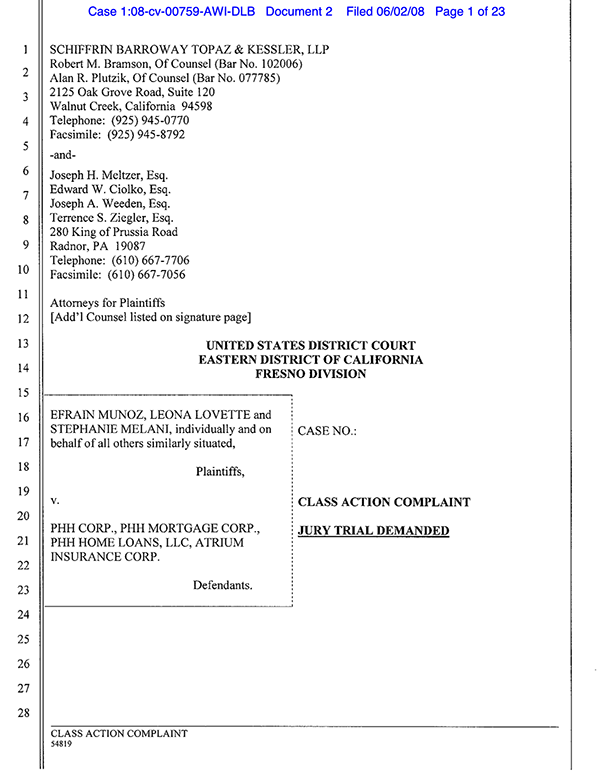
After 17 years of litigation, a certified class of homeowners has received final approval in a California federal court for a $29.5 million settlement with PHH Mortgage.
This long-simmering legal battle involved claims that PHH received kickbacks from a PMI company for its private mortgage insurance. Without getting into the elaborate details, the allegations assert a form of fee splitting under the guise of payment for services. RESPA allows for the payment for services from one person to another. The fact that the person receiving referrals pays the person making referrals in itself does not violate RESPA so long as the payments are commensurate with the product or service provided.
The problem with these arrangements with persons in positions to make referrals is that if the compensation paid to these persons for services exceeds the market value of the service, the excess payment may violate RESPA.
Tom, a mortgage originator, rents office space from a real estate broker. The market value of the office condominium he rents is $2,500 per month, but Tom pays the broker $5,000 monthly. Tom also receives referrals from the real estate broker. Law enforcement could view the excess rent as a kickback.
Regulation X, 12 CFR § 1024.14(b) No person shall give and no person shall accept any fee, kickback or other thing of value pursuant to any agreement or understanding, oral or otherwise, that business incident to or part of a settlement service involving a federally related mortgage loan shall be referred to any person.
Regulation X, 12 CFR § 1024.14(g)(1)(iv) RESPA permits a payment to any person of a bona fide salary or compensation or other payment for goods or facilities actually furnished or for services actually performed;
Regulation B 12 CFR § 1024.14(g)(2) If the payment of a thing of value bears no reasonable relationship to the market value of the goods or services provided, then the excess is not for services or goods actually performed or provided. These facts may be used as evidence of a violation of section 8 and may serve as a basis for a RESPA investigation.
From the Munoz v. PHH Corp. Settlement Website
All persons who obtained residential mortgage loans originated and/or acquired by PHH and/or its affiliates from January 1, 2007, through December 31, 2009, and, in connection therewith, purchased private mortgage insurance and whose loans were included within PHH’s captive mortgage reinsurance agreements, including the successors, heirs and/or assigns of such persons.
A settlement has been reached in the class action lawsuit pending in the Eastern District of California entitled Munoz, et al. v. PHH Corp., et. al., Case No. 1:08-cv-00759-MMB-BAM (the “Action”). Efrain Munoz, Leona Lovette, Stephanie Melani, John Hoffman, and Daniel Maga, II (collectively “Plaintiffs” or “Class Representatives”) allege that PHH Corp., PHH Mortgage Corp., PHH Home Loans, LCC, and Atrium Insurance Corp. (collectively “Defendants”) violated the law which prohibits the payment of kickbacks in connection with mortgage settlement services. Defendants have denied any wrongdoing. The Court hasn’t decided who is right. Instead, the parties agreed to a settlement to avoid more litigation.
Defendants have agreed to pay $875 per loan to Settlement Class Members who file a valid Claim Form. Eligible Settlement Class Members must complete and timely submit a valid Claim Form by mail or online through the File a Claim page. If submitting your Claim Form by mail, it must be postmarked by August 11, 2026. If you submit a Claim Form online, you must submit it by August 11, 2026.
Tip of the Week – One Class Left
It’s Not Too Late to Register for a 2025 CE Webinar!!!
December 29th and 30th Only
Expanding your product offerings is an effective way to enhance your business’s vitality. This year, the Loan Officer School is surveying non-government financing options for construction and renovation projects.
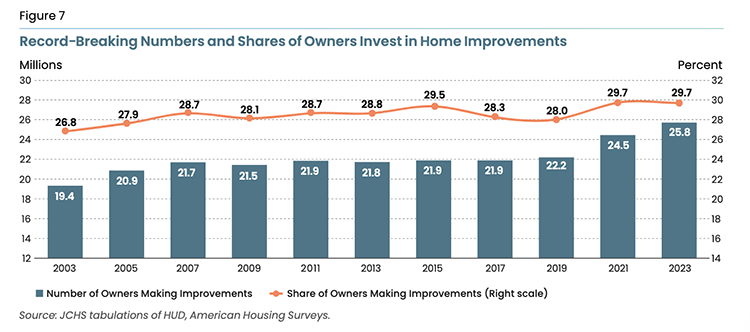
The shortage of affordable housing is unlikely to be resolved anytime soon. As affordable, move-in-ready housing solutions remain hard to find, the demand for construction and renovation loans is expected to increase. According to the JCHS, Harvard University, the US remodeling market soared above $600 billion in the wake of the pandemic and, despite recent softening, remains 50 percent above pre-pandemic levels.
Discover how to enhance borrower advantages through construction and renovation financing.
- Enhanced housing affordability.
- Housing options for aging or disabled borrowers.
- Housing solutions for borrowers caring for aging or disabled family members.
- Multi-generational housing solutions.
For any questions or inquiries regarding state education needs, please feel free to call.
Call Us Today! (866) 314-7586
Online self-study classes are available.
Sign up for 2025 Online self-study CE