

Why Haven’t Loan Officers Been Told These Facts?
HPML, Non-QM, and Cinderella
Recently, the LOSJ took some time to explore the world of Qualified Mortgages (QM) and non-Qualified Mortgages (non-QM) to clarify what these transactions entail. One term that tends to trip people up is “Higher Priced Mortgage Loans” (HPML) under Regulation Z. Basically, if a mortgage goes above the HPML Average Prime Offer Rate (APOR) thresholds but still qualifies as a QM, it falls into a category we call rebuttable QM mortgages. If you’re curious to learn more about this or want to dive into the differences between rebuttable and non-rebuttable QM loans, just check out the links below.
Can non-QM styled loans actually meet QM requirements? Besides the APR spread, what else keeps these non-QM loans from qualifying for the safe harbor? Also, how are Higher Priced Mortgage Loans under Regulation Z connected to non-QM loans? Are they similar or the same thing?
HPML
An HPML, or Higher-Priced Mortgage Loan, is identified by a specific APR threshold. The goal here is simple: if someone is paying a higher price for a mortgage, they merit extra protections and careful evaluation. For consumers with limited options, often due to subprime credit characteristics, there’s a greater chance they might find themselves in situations with riskier loan features. Stakeholders want to ensure that vulnerable consumers are treated fairly and have access to safer mortgages.
“Higher-priced mortgage loan” means a closed-end consumer credit transaction secured by the consumer’s principal dwelling with an annual percentage rate that exceeds the average prime offer rate for a comparable transaction as of the date the interest rate is set:
- 1.5 or more percentage points for loans secured by a first lien that does not exceed the Freddie Mac conforming loan limit.
- 2.5 or more percentage points for loans secured by a first lien that exceeds the Freddie Mac conforming loan limit.
- 3.5 or more percentage points for loans secured by a subordinate lien.
The APOR price threshold benchmark is an index representing the best interest rates for well-qualified non-government borrowers. APOR serves as a reasonable composite benchmark for prime residential mortgage financing. Lenders select the appropriate comparable transaction.
The calculation of average prime offer rates (APORs) is based on survey data for eight mortgage products.
- 30-year fixed-rate
- 20-year fixed-rate
- 15-year fixed-rate
- 10-year fixed-rate
- 10/6 variable rate
- 7/6 variable rate
- 5/6 variable rate
- 3/6 variable rate
The CFPB publishes 15 weekly APORs
Among the 8 transaction types, the CFPB uses interpolation and extrapolation techniques to estimate APRs for 7 additional products (2/6 and 1/6 variable-rate loans and 7-, 5-, 3-, 2-, and 1-year fixed-rate loans) to be used alongside the 8 products in the survey data.
If the transaction type does not match any of the 15 types, lenders follow CFPB rules to select the appropriate APOR.
If you are shaky on interpolation and extrapolation techniques, extrapolation is a way to make estimates for a hypothetical situation based on existing data. Interpolation relies on a data set, such as the 1003 or URAR, to make conclusions that go beyond what the raw data indicates. AU Systems are algorithms (or heuristics) guided by the principles of interpolation. Hope that clears it up.
HPML Has Protections That Non-HPML Loans Do Not
- Mandatory five-year escrow
- Mandatory second appraisal for some seller flips (at no charge to buyer)
- More stringent underwriting (ATR) requirements
HPML (Higher-Priced Mortgage Loans) can come in various forms, including fixed-rate, adjustable-rate mortgages (ARMs), and balloon-payment options. Just a heads-up: having an HPML designation doesn’t mean it can’t be a Qualified Mortgage (QM). According to the General QM rule, QM loans may have annual percentage rates (APRs) up to 2.25% higher than the Average Prime Offer Rate (APOR). For conforming HPML loans, the APR threshold is set at 1.50% over APOR. And good news—Government-Sponsored Enterprises (GSEs) are on board and will buy HPML-QM loans.
Wondering how non-QM loans connect with HPML? It’s an interesting topic! Non-QM loans can either fall under the HPML category or not. Plus, a few years ago, the CFPB rolled out a new option called the “Seasoned QM,” which adds even more variety to the mix. With a sprinkle of Cinderella magic, what used to be a non-QM or rebuttable QM can happily turn into a safe harbor QM!
Put a Little Cinderella Seasoning Upon It
§ 1026.43(e)(1)(i) Safe harbor For Seasoned Loans. A creditor or assignee of a seasoned qualified mortgage complies with the repayment ability requirements.
§ 1026.43(e)(7)(i) General. A seasoned qualified mortgage is a first-lien covered transaction that is a fixed-rate mortgage, not an ARM or a step-rate (temporary buydown) mortgage, with fully amortizing payments (no negative amortization).
Not Allowed to Become a Seasoned QM:
- Balloon-payment
- Negative Amortization
- ARM
- Step-Rate (Temporary Buydown)
- High Cost Loan (HOEPA Section 32)
This Seasoned QM rule establishes a conclusive presumption of TILA-ATR compliance (safe harbor) for loans originated as non-QM or rebuttable-presumption QM loans.
The Seasoned Qualified Mortgage (QM) refers to first-lien, fixed-rate covered transactions that meet specific performance criteria for a minimum seasoning period of 36 months. During this period, these transactions must be retained in the lender’s portfolio by the originating creditor or the first purchaser.
There are several exceptions to this portfolio requirement, similar to those for the Small Creditor QM under the ATR/QM Rule. There is also an exception for a single loan transfer (first purchaser) during the seasoning period. In the event of such a transfer, the seasoned QM rule requires the purchaser to hold the loan in portfolio until the end of the seasoning period.
To qualify as a Seasoned QM, the total points and fees of the loan must not exceed the specified limits outlined in the General QM requirements.
For a loan to be eligible to become a Seasoned QM, the rule requires that the creditor consider the consumer’s DTI ratio or residual income, income or assets other than the value of the dwelling, and debts and verify the consumer’s income or assets other than the value of the dwelling and the consumer’s debts, using the same consider and verify requirements established for General QMs under Regulation Z.
The loan must meet the “on-time” performance requirements at the end of the seasoning period. Specifically, the seasoning qualification is available only for covered transactions that have no more than two delinquencies of 30 or more days and no delinquencies of 60 or more days at the end of the seasoning period.
See the links below for more information.
BEHIND THE SCENES: VA CERTIFICATE OF ELIGIBILITY APP?
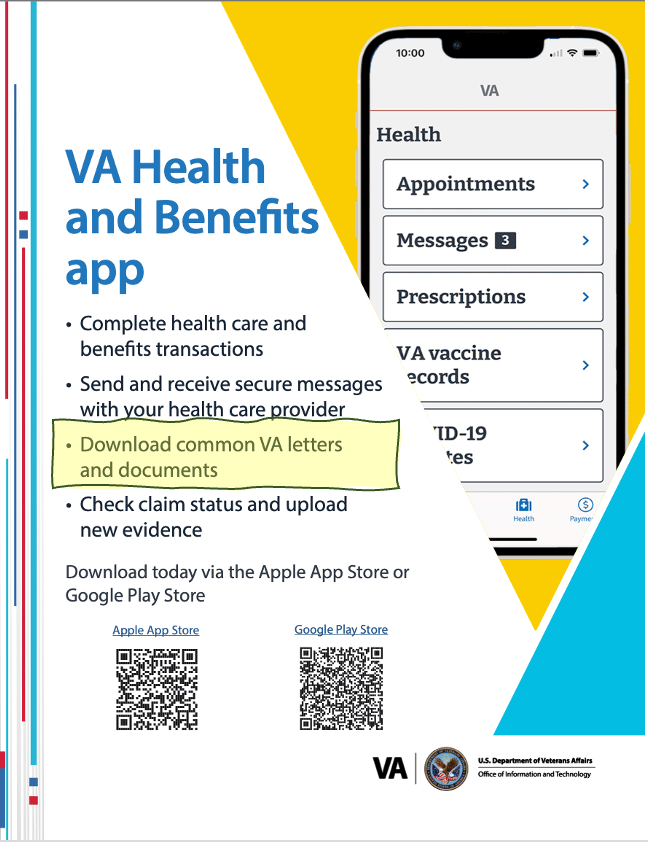
The Department of Veterans Affairs is excited to announce an important update to the VA: Health and Benefits mobile app. Eligible Veterans will soon be able to conveniently view their active Certificate of Eligibility (COE) Home Loan Letter in the VA: Health and Benefits mobile app. By improving both ease of access and timeliness, this enhancement makes it easier for Veterans to take the next step toward homeownership.
Note that eligible Veterans can only view their active COE through the app. For any requests or changes to the COE, Veterans should contact their mortgage lender or visit VA.gov. If a Veteran is using their VA home loan benefit again, they should work directly with their mortgage lender to have their COE refreshed.
The VA: Health and Benefits mobile app provides Veterans secure, convenient access to VA benefits and services. From health care appointments to benefit status updates, the app simplifies and improves the Veteran experience.
Should you have any questions, please submit a ServiceNow ticket. Thank you for your attention to this matter. VA values your commitment to supporting Veterans, service members, and eligible surviving spouses using the VA-guaranteed home loan program.
Sincerely,
Loan Guaranty Service
Tip of the Week – Have a Question About Operations, Sales, Marketing, or Compliance? Email Your Questions to the Loan Officer School Journal.
We invite LOSJ readers to submit questions on any topic to the editor. Topics can include compliance, sales, marketing, implementation, and other areas that may be helpful to our customers. If we use your question, we will include only your first name in our response. Please send your questions to: losjmailbag@gmail.com.
Necessary Mailbag Disclosure: The LOSJ is a periodic publication from LoanOfficerSchool.com designed to educate and inform our readers. Please note that we do not provide legal advice, and nothing in the LOSJ should be construed as a legal opinion on specific facts or circumstances. The content serves strictly for informational purposes. We strongly advise readers to consult legal counsel regarding any legal matters or specific questions.