
Why Haven’t Loan Officers Been Told These Facts?
This week, in step with the season, the LOSJ continues to tell the allegorical tale of Eva and her mentor, the crafty and unscrupulous Mr. Mendax. More than 80 years ago, C.S. Lewis, the noted British scholar, writer, and Christian apologist, penned the famed satire, “The Screwtape Letters.” In the spirit of late medieval Christian spiritual notions, Lewis sought to expose and mock the wicked shenanigans of two fictional evil spirits who do everything in their power to make an ape of man (their “patient”). The book introduces the reader to two spirits: Screwtape, the more accomplished and seasoned spirit; and his protégé, Wormwood.
In the spirit of the season- Halloween, Reformation Day, and the 88th anniversary of Orson Welles’s radio rendition of H.G. Wells War of the Worlds- the LOSJ borrows from Lewis’s satire, with hopes of encouraging and amusing the many honest, hardworking mortgage loan originators who commit themselves to serving their customers with honor, integrity, competence, and love.
Though Mr. Mendax was one of his era’s most prolific originators, the LOSJ sincerely hopes mortgage loan originators will find his practices and guidance to young Eva abhorrent.
Mendax and His Message
Eva,
As I mentioned last week, I’m excited to share some tips to help improve your loan presentation skills, especially when creating estimates for escrows and prepaids! These are great opportunities to make your Loan Estimate look better and truly impress your customers. The best part? There aren’t any strict accuracy requirements for these estimates, so you have the freedom to get creative and make your Loan Estimate shine. Let’s dive into a few key areas to focus on for some great improvements!
– The Homeowners Insurance Premium
– The Mortgage Insurance Premium
– Property taxes on take-out financing
– Per diem interest
Homeowners insurance presents a unique level of flexibility among these estimates. Like mortgage insurance, homeowners insurance premiums can vary widely by transaction. However, many factors that influence homeowners insurance costs may not be apparent when preparing the Loan Estimate, which gives us exceptional flexibility!
Let me explain how it works. For Loan Estimate subheadings F and G, estimate the premium at about 30 to 50 percent of an average quote. This can really help lower the cash needed for closing, and you might be amazed at how much your monthly payment drops! Many factors can affect a specific property’s insurance cost, and you might discover some interesting surprises. It’s really a wonderful situation!
When considering PMI, it’s important to use the right inputs to get a lower premium. I recommend using a +760 credit score, focusing on single-family homes, and utilizing 15-year pricing as a starting point. If the prospects prefer a 30-year term, you can adjust the premium near closing.
Property taxes can be tricky, which is why they are great to work with; they offer strong opportunities, depending on a few factors. If refinancing new construction or buying a new home, the process is pretty simple! Did you know many borrowers qualify for various property tax exemptions? They can really make a difference! These exemptions could reduce your base property tax calculation by 25% to 30%. How awesome is that? Be aggressive with this estimate.
Subheading H stands for HAVOC, which is what you create when populating this subheading. This section is easy to complete. If you want to impress your customer, leave it blank. It’s all about keeping things simple.
Per diem interest is an effective method to accommodate our customers’ needs. Given the uncertainty around the deal’s closing date, providing an interest credit is prudent. I recommend consistently calculating a seven-day interest credit to ensure clarity, consistency, and communication with our clients.
Here are a few friendly suggestions on proportionality! When you have more sections and costs to estimate, it’s easier to make small tweaks that can really enhance the overall balance—nothing too noticeable, just a little adjustment here and there. On the other hand, if you’re working with fewer sections, you might need to go bigger with those adjustments and offer larger discounts on the estimates. Just keep that in mind as you decide how to approach it!
Next week, I can’t wait to bring everything together! I know you might be curious about what happens during the closing week, especially if the cash call is a bit higher than expected and the projected monthly payments are more than those in the Loan Estimate. Don’t worry—I’ve got some helpful closing secrets to share with you! Stay tuned!
I just wanted to say how impressed I am with your Loan Estimates from last week—they’re looking fantastic! I heard you were the star for new applications this month, and I can’t thank you enough for all your hard work. Keep an eye out for a little surprise as a token of my appreciation for everything you’ve accomplished. This is just the beginning; today you’re at the top of the office, and who knows—tomorrow, you could be at the top of the President’s Circle! Keep it up!
Cheers,
Mendax
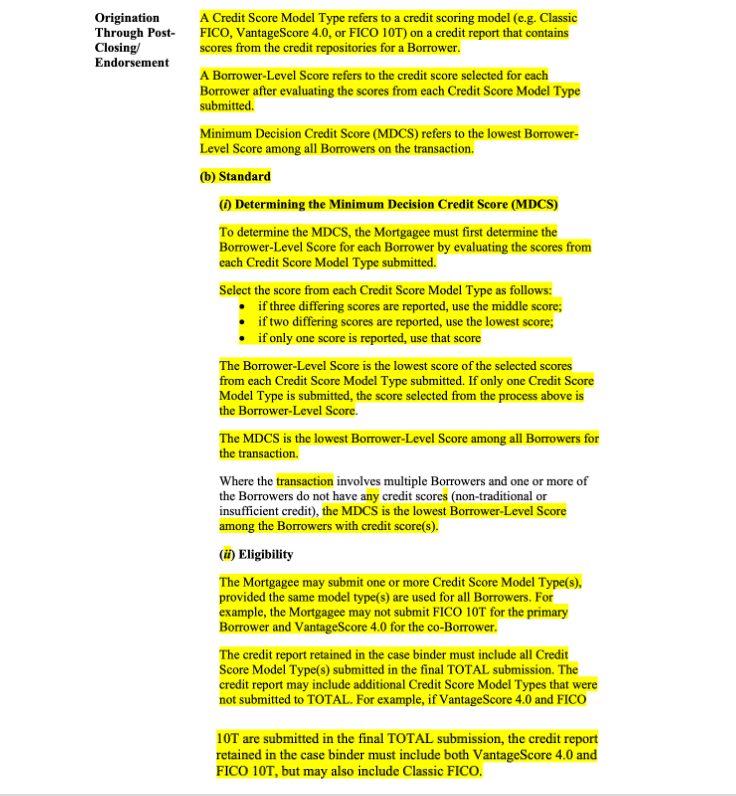
Amended MDCS Section 4000.1
BEHIND THE SCENES: HUD ADOPTS NEW SCORE MODELS ALONGSIDE CLASSIC FICO
HUD has announced that, for case numbers assigned on or after January 1, 2027, lenders must follow the updated policy for “Minimum Decision Credit Score (MDCS).”
This exciting change will foster innovative processes for thin-file and other credit-marginal applicants. If you’re unfamiliar with alternative credit data and trended data models, see these LOSJ issues: LOSJ V4 I9, LOSJ V4 I50. A few new processes and rules will apply. While it is possible to generate all three approved model scores in one report, the mortgagee must use the lowest representative score from among multiple models as the MDCS. Yet, the FHA also states, “Lenders may work with credit providers to have one or more models removed and resubmit to TOTAL if desired,” which seemingly allows lenders to remove unwanted model scores from the Total submission. That would be very interesting if FHA permits what is essentially model-score shopping.
FHA uses the term credit score model to refer to Classic FICO® (Classic), VantageScore® 4.0 (V4), and FICO® Score 10T (10T). Beginning with case numbers assigned on or after January 1, 2027, FHA will accept V4 and 10T credit score models in addition to Classic.
A Borrower-Level Score refers to the credit score selected for each Borrower after evaluating the scores from each Credit Score Model Type submitted. Minimum Decision Credit Score (MDCS) refers to the lowest Borrower-Level Score among all Borrowers on the transaction (see Fig. 2 below).
Representative MDCS Must Be Derived From One Score Model
All borrowers on a loan must be scored using the same credit score model(s). For example, a lender cannot use V4 for the primary borrower and 10T for a co-borrower. When multiple credit score models are included in a TOTAL Scorecard submission, all models must pass the scorecard evaluation for the transaction to receive an Accept. Lenders may change the models when rescoring a transaction, provided all borrowers are scored with the same credit score model(s). Lenders may prefer to submit a single credit score model for all borrowers.
Lenders should review the credit report carefully and assess whether all credit scoring models meet FHA’s minimum score requirements. All credit score models submitted to TOTAL Scorecard must receive an Accept recommendation for the final result to be an Accept. If any one credit score model receives a Refer recommendation, the final recommendation will be a Refer.
No Change
Calculating the MDCS remains the same as it is today when one credit score model is submitted. Where three differing scores are reported, the middle score is the MDCS. Where two differing scores are reported, the MDCS is the lowest score.
Where only one score is reported, that score is the MDCS. An MDCS is determined for each Borrower. Where there are multiple borrowers, the MDCS is the lowest of all borrowers.
Working With More Than One Score Model
MDCS Requires Lenders To Use the Lowest Score When Submitting Multiple Models
As indicated, if you work with more than one credit score model, you must take an additional step. An MDCS is determined for each borrower and for each credit score model. An individual borrower’s MDCS is determined by evaluating the scores for each credit score model present and using the lowest of those scores. For each credit score model, if:
• Three scores are reported, the median score is the model score;
• Two differing scores are reported, the model score is the lowest score;
• Only one score is reported, that score is the model score.
After the MDCS has been determined for each borrower, the MDCS for the transaction is the lowest MDCS score of all borrowers. See the illustration labeled Fig. 2 below.
Cherry Picking the Credit Score Models
The FHA states that “Lenders may work with credit providers to have one or more models removed and resubmit to TOTAL if desired.” HUD clarified this in the October 8, 2026, Alternative Credit Scores Questions and Answers and in FHA INFO 2026-24, which outlines updates to the policy for implementing alternative credit scores.
For example, consider the illustration in Fig. 2 below. Based on FHA’s guidance, the lender could remove Model Types 1 and 2 and submit only Model Type 3 to TOTAL, thereby improving the MDCS from 580 to 620. Lenders may want to confirm this scenario with FHA (see the link below to attend FHA Virtual Office Hours Team meetings).
While one might assume the same applies to manual underwriting, as mentioned, it would be wise to confirm this with the FHA during one of their upcoming “Virtual Office Meetings” via Microsoft Teams. You can find the schedule linked below. Don’t forget, when submitting for multiple borrowers, lenders must use the same model for each borrower.
Excerpts From Mortgagee Letter 2026-11
The Administration has prioritized reducing housing costs, expanding access to mortgage credit, and promoting competition and innovation in the mortgage market. Consistent with these priorities, FHA is adopting alternative credit score models, FICO 10T and VantageScore 4.0, alongside Classic FICO, to modernize its credit scoring framework. The new models leverage trended data which analyzes a consumers’ credit behavior over time. They also leverage non-traditional credit like rent and utilities which, along with the trended data, provide greater predictive power allowing FHA to better quantify risk and increase access to homeownership.
FHA will continue to require a tri-merge credit report, and the existing minimum credit score thresholds remain unchanged regardless of Credit Score Model Type.
The Home Equity Conversion Mortgage (HECM) program does not rely on credit scores as an underwriting component. Accordingly, the reference to the MDCS is being deleted from the general eligibility requirements for the program.
Date: October 8, 2026
Mortgagee Letter 2026-11
Subject: Updated Minimum Decision Credit Score Methodology for the
Implementation of Alternative Credit Scores
Purpose: This Mortgagee Letter (ML) updates FHA’s Minimum Decision Credit Score (MDCS) methodology to facilitate the adoption of alternative credit score models.
Affected Programs: The provisions of this ML apply to all FHA-insured Title II Single Family mortgage programs.
Effective Date: The provisions of this ML are effective for case numbers assigned on or after January 1, 2027
FHA Alternative Credit Scores Preparedness Guide
HUD Alternative Credit Scores FAQ
HUD Alternative Credit Scores Virtual Meetings Schedule (Nov-Jan)
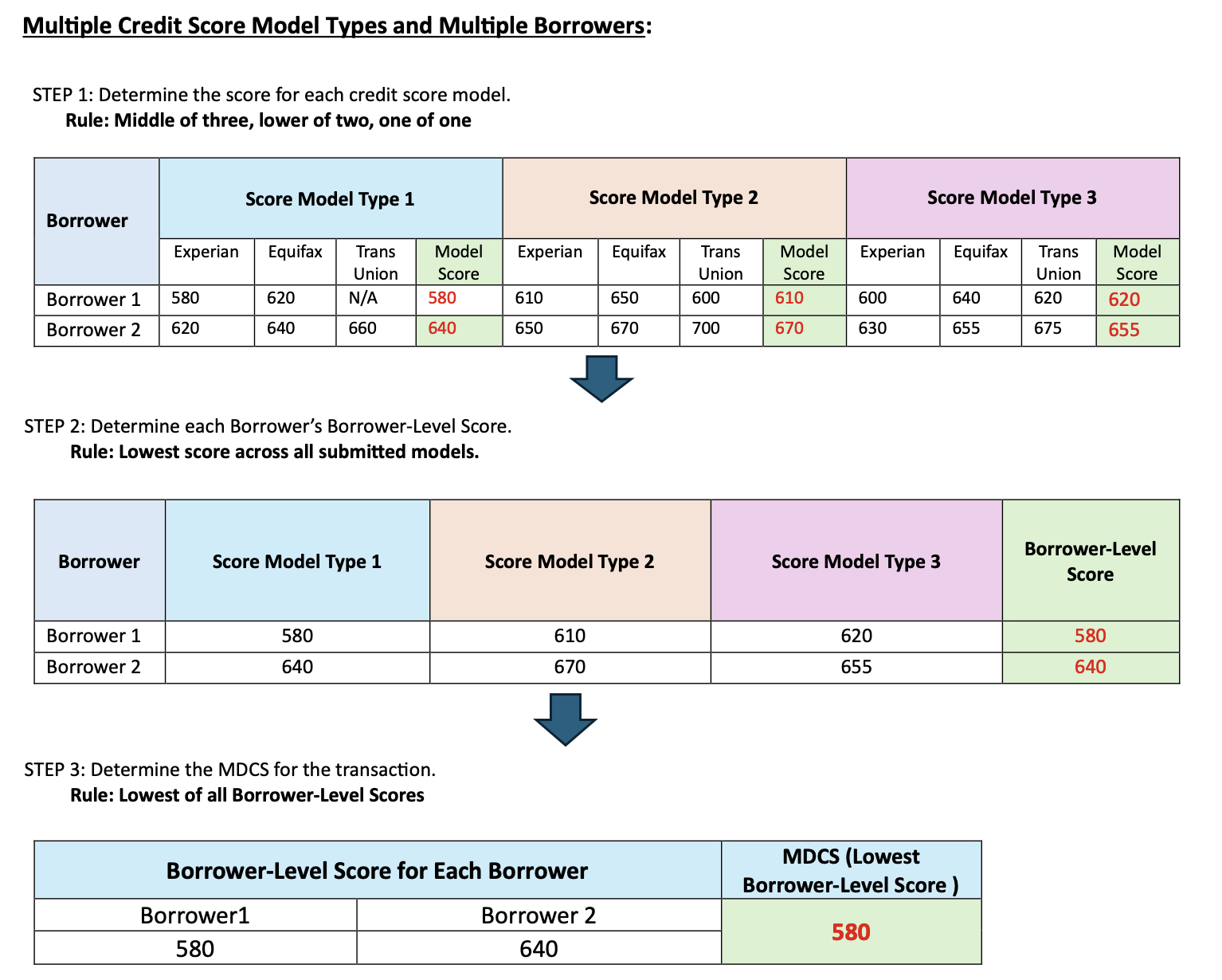
Fig. 2 excerpted from the FHA Alternative Credit Scores FAQ

Tip of the Week: Sign up for 2026 CE
The LOSJ is celebrating five years of exceptional service to the mortgage industry, offering insights you won’t find anywhere else. To celebrate, enjoy our gift to you! Use the promo code “newsletter” when placing your class order.
Expanding your product offerings is an effective way to enhance your business’s vitality. This year, the Loan Officer School is surveying non-Qualified Mortgage (non-QM) financing options. We will review the various types of underwriting required for non-QM financing, including higher-priced mortgage loans (HPML), balloon-payment features, and interest-only options.
Presenting non-QM solutions to consumers improperly can lead to serious consequences. Understand the essentials of compliant and ethical subprime mortgage origination. Attend the Loan Officer School 2026 continuing education classes.
Please use the promo code “newsletter” when you sign up.
Have a Question About Operations, Sales, Marketing, or Compliance? Email Your Questions to the Loan Officer School Journal.
We invite LOSJ readers to submit questions on any topic to the editor. Topics can include compliance, sales, marketing, implementation, and other areas that may be helpful to our customers. If we use your question, we will include only your first name in our response. Please send your questions to: losjmailbag@gmail.com.
Necessary Mailbag Disclosure: The LOSJ is a periodic publication from LoanOfficerSchool.com designed to educate and inform our readers. Please note that we do not provide legal advice, and nothing in the LOSJ should be construed as a legal opinion on specific facts or circumstances. The content serves strictly for informational purposes. We strongly advise readers to consult legal counsel regarding any legal matters or specific questions.